
Enhancing Mission Efficiency:AF1 Intelligent Search-and-Strike System
Automated Search · Precision Strike Efficient Coordination· Strong Anti-Jamming
UNIBIRD
11/28/20252 min read
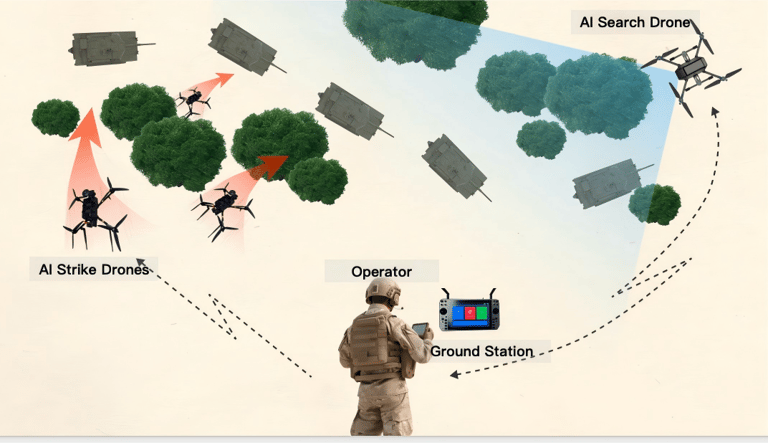
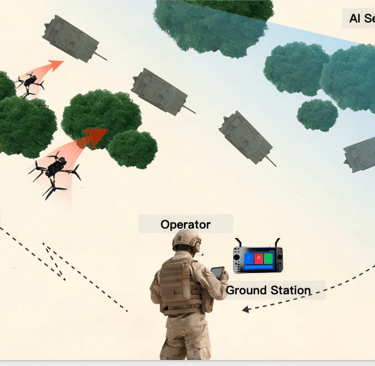
As unmanned systems become more essential in modern combat zones, faster, smarter, and more reliable ways have been sought to coordinate UAV missions. Traditional multi-aircraft operations often require trained pilots, complex flight planning, and manual routing adjustments. The AF1 Integrated Search-and-Strike System is designed to solve this obstacle —bringing together reconnaissance, target management, and multi-drone execution in one streamlined solution. AF1 can automatically assign targets, lock onti them with precision, and carry out multi- wave coordinated strikes in a GPS-denied environment — without requiring manual piloting.
A New Paradigm for Autonomous Coordination
At its core, the AF1 controls a search drone and up to 16 strike drones. The system supports control ranges of up to 15 kilometers, and fiber-optic links can extend communication to 40 kilometers while providing strong resistance to jamming. The search drone conducts autonomous reconnaissance and sends target information in real time. Meanwhile, the strike drones track and lock onto targets rapidly, maintaining performance even under radio interference to ensure reliable mission execution.
Key capabilities include:
Automated target detection & distribution
Real-time coordinate calculation & data sharing
One-to-many mission control (1 operator → 16 drones)
Autonomous flight, tracking, & terminal strike:
GPS anti-jamming & fiber-optic communication options
4G remote activation & laser-guided strike support
How It works
1. Mission Setup
Operators can define a reconnaissance area directly on the ground-station interface. The system then generates an optimized search route without requiring manual waypoint design.
2. Autonomous Reconnaissance
The search UAV conducts real-time scanning, analyzes potential targets using onboard systems, and automatically organizes the results into a structured information set.
3. Intelligent Task Assignment
Once the operator reviews the reconnaissance results, tasks can be assigned to available drones in a single step. All necessary information—such as imagery and location metadata—is automatically relayed to the selected units.
4. Coordinated Multi-Drone Response
Connected drones initiate their mission profiles autonomously, benefiting from navigation systems designed to operate reliably even in challenging signal conditions.
5. Continuous Monitoring and Assessment
This workflow not only improves operational efficiency but also enables organizations to conduct large-scale, time-sensitive missions with significantly fewer personnel.
System Composition and Platform Flexibility
The AF1 system is structured around three main components:
Ground Station – Serves as the operational hub, responsible for mission planning, data visualization, and multi-platform coordination.
Search UAV – Optimized for autonomous data collection and situational analysis.
Task UAVs – Execute coordinated mission actions based on the intelligence received
To accommodate different mission profiles, the AF1 Series supports multiple UAV sizes—including 10-inch, 13-inch, and 15-inch platforms. Depending on configuration, flight times can reach up to 50 minutes, with operational ranges suitable for mid- and long-distance applications.
Additionally, the system can utilize fiber-optic communication links in environments where electromagnetic interference presents a challenge. This ensures stable data transmission and enhances the reliability of long-duration operations.
Moving Toward an Integrated Multi-UAV Future
As UAV usage expands into increasingly complex environments, the need for an integrated, resilient, and automation-driven system becomes clear. The AF1 Intelligent Search-and-Strike System demonstrates how coordinated autonomy can support higher mission efficiency, reduced operator burden, and better performance under challenging conditions.
By combining multi-aircraft integration, communication architecture, and streamlined operational workflows, the AF1 platform represents an important step toward the future of intelligent, collaborative UAV fleets.