
N200 VIO Navigation Module: A Reliable and Economical Solution for UAV Operations in GPS-Denied Environments
Reduce the cost per successful strike to 1/5 of regular FPV
UNIBIRD
12/2/20252 min read

As electronic warfare and signal interference become increasingly common across modern combat zones, traditional GPS-based navigation systems face significant challenges. In many regions, widespread jamming has reduced the success rate of FPV drones to below 5%, pushing the cost of a successful strike to unsustainable levels. Fiber-optic systems can mitigate the obstacle partially, yet their operational limitations and high failure rate—especially during long-range flights or sharp turns—limit their overall mission reliability.
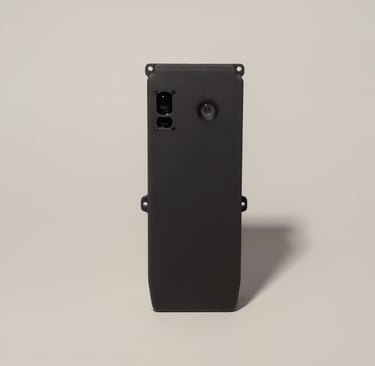
To address these issues, the N200 VIO Navigation Module introduces a new approach to UAV navigation. Powered by advanced VIO (Visual Inertial Odometry) technology, the module enables drones to maintain accurate positioning, stable flight, and reliable mission execution without GPS signals.
A New Path to UAV Navigation Without GPS
The module integrates a visual sensors with an IMU, allowing the aircraft to process visual features and motion data in real time. By detecting ground textures, surrounding structures, and environmental patterns, the system delivers real-time navigation even in heavily jammed conditions.
This GPS-free approach brings several operational advantages:
Stable autonomous flight in GPS-denied zones
Accurate direction keeping and route following
Reliable takeoff, landing, hover and altitude hold without satellite signals
Terrain-following flight without pre-loaded maps
Ability to execute pre-set routes without wireless control links
Performance and Cost Efficiency
Extensive analysis shows that UAVs equipped with N200 VIO Visual Navigation Module can achieve:
80–90% mission completion rate in jamming zones
Strike cost reduced to approximately $1,900
Only 1/5 the cost of regular FPV strikes
Less than half the cost of fiber-optic-guided drones
By eliminating reliance on GPS and avoiding the limitations of fiber-optic cabling, the module significantly reduces operational risk and overall cost.
Why Regular FPVs and Fiber-Optic Drones Struggle
1.Regular FPV Drones
Mission success rate drops below 5% in jamming zones
High dependence on GPS and wireless link stability
Estimated $10,000 per effective strike
2.Fiber-Optic Drones
The probability cable break increases sharply beyond 5 km or when turning over 90°
Speed limited to ≤ 50 km/h
Cable weight reduces payload and maneuverability
Mission success rate only 15–20%
Average strike cost around $4,700
In contrast, GPS-free visual navigation is unaffected by turn angles, flight distance, speed, or cable durability, making it a more reliable and efficient option.
Key Features of the GPS-Free Navigation Module
1. True GPS-Free Flight
The drone maintains stable navigation—even with zero GPS signal—following predefined routes or maintaining direction through interference.
2. Autonomous Takeoff, Landing & Hover
Altitude and position are maintained through visual and inertial sensing, enabling precise hovering and task execution.
3. Terrain-Following Without Map Data
The system continuously analyzes ground features to adjust altitude, supporting safe flight over uneven terrain.
4. Pre-Set Route Execution Without Control Signals
Even if the control link is fully lost, the drone can complete its assigned mission autonomously.
A Reliable and Economical GPS-Free Navigation Solution
In environments where GNSS disruption has become the norm rather than the exception, theN200 VIO Visual Navigation Module offers a reliable and cost-effective alternative to FPV and fiber-optic systems. With strong performance in GPS-denied conditions, reduced cost, and broad compatibility with existing UAV platforms, it provides a powerful foundation for UAV operations.
Operating in high-interference regions, visual navigation is no longer just an enhancement—it is becoming the new standard for mission reliability and operational efficiency.